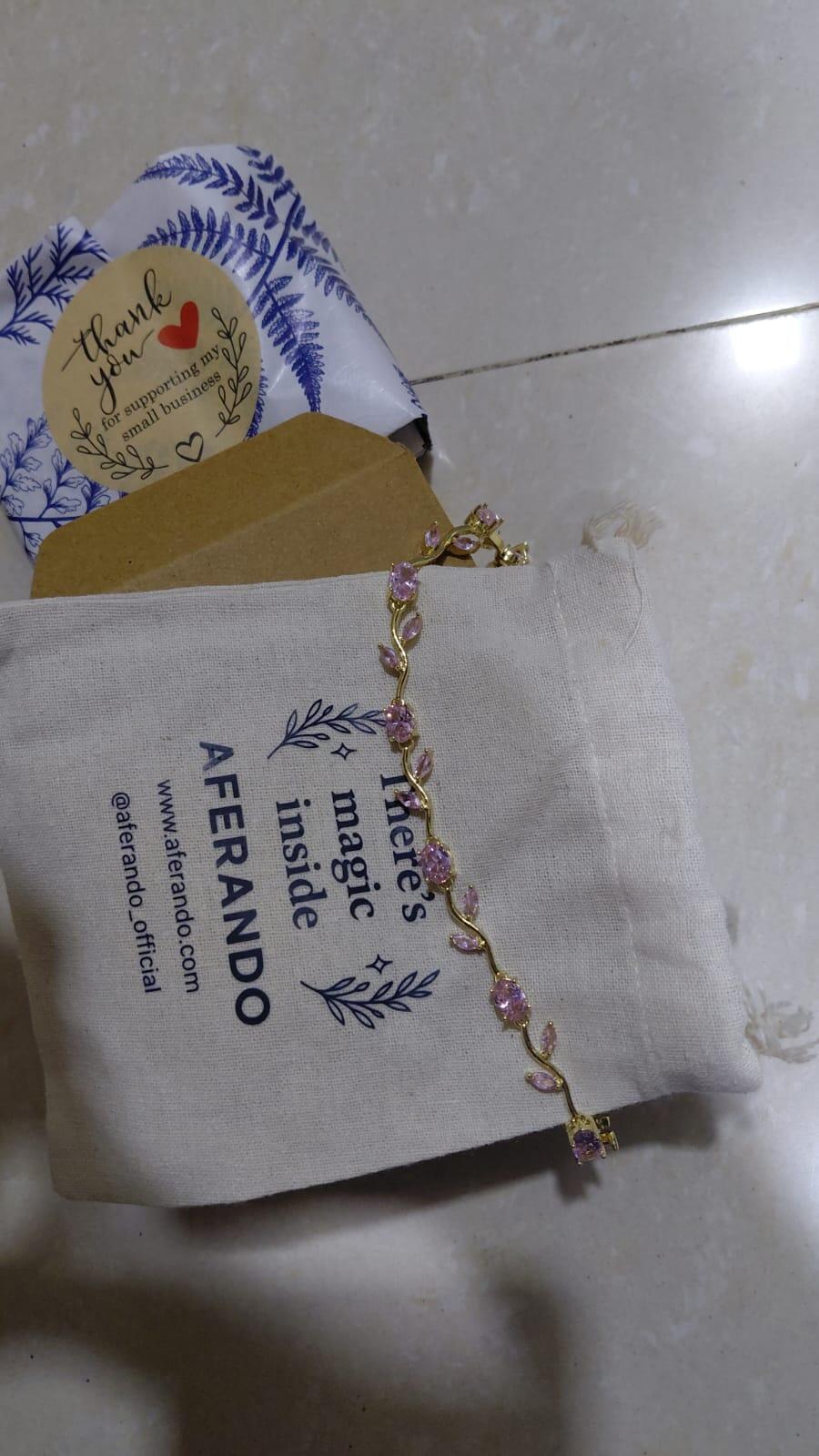
The tulip bracelet in the colour nobody else is wearing.
Pink is the one everyone bought first. Green is the one people notice second — and then wish they'd chosen.
Deep green crystal tulips set into a wavy 18K gold band. Green and gold is the oldest pairing in Indian jewellery for a reason: it reads rich rather than sweet, it lifts every neutral you own, and it doesn't disappear against a printed saree the way a pale stone does.
It's also the most useful colour in the range once you've worn it a few times. Pink asks for pastels. Green works against cream, ivory, white, beige, black, denim and every jewel tone — which is most of a wardrobe.
Underneath, it's anti-tarnish 304 stainless steel with 18K gold plating. Most tulip bracelets at this price are brass or mixed alloy, which is why they go dull within a fortnight and leave a green ring on the wrist. Stainless steel doesn't carry that reactive copper. This one stays gold.
Key highlights
- Deep green crystal tulips on a wavy 18K gold plated band
- Anti-tarnish 304 stainless steel base
- Hypoallergenic and skin-safe — no green marks, gentle on sensitive skin
- The most versatile colour in the tulip range — works with neutrals and ethnic wear alike
- Lightweight enough to forget you're wearing it
- ₹499 · Ships in 1–2 days across India
How to style it
Against cream, ivory or white it's at its best — the green becomes the only colour in the look, which is what makes a plain outfit read as deliberate rather than plain.
With ethnic wear it does something the pink and pastel versions can't. Green holds its own against embroidery, zari and prints, so it works with a saree or a kurta where a softer stone would vanish. Pick the green up somewhere else in the outfit — a border, a thread, a bindi — and the whole look ties together.
Wear it solo, or stack with one plain gold bangle. Avoid pairing it with another stone bracelet; two sets of colour compete for the same attention.
Perfect for gifting
Green is the safest colour to give in Indian gifting — it's associated with prosperity and new beginnings, it suits every skin tone, and it works with the ethnic wear most women already own. Tulips symbolise affection and good wishes rather than romance, so it reads right for a sister, a friend or a colleague as easily as a partner. Check the measurement below against her wrist before ordering.
Care
Anti-tarnish, but not waterproof. Remove before bathing, swimming or applying perfume. Wipe with a soft dry cloth after wear and store in a pouch to protect the crystal settings.
Frequently asked questions
Which tulip bracelet colour should I choose?
Choose green if you want the most versatile option — it works with cream, white, black, denim and ethnic wear, and it's the least commonly worn of the range. Choose all-pink if you mostly wear creams and pastels and like a single soft colour. Choose the pastel (pink, purple and white) for something gentle that still crosses a full wardrobe. Choose the multicolour if you want maximum colour and wear a lot of festive clothing. All are the same band, plating and price — only the stones differ.
What is the viral tulip bracelet?
It's a floral crystal bracelet that spread through Instagram and Pinterest reels — oval and marquise-cut stones set into a wavy gold-toned band, arranged to look like tulip petals and leaves. It went viral because it photographs unusually well and suits both Western and Indian outfits. Most versions sold at low prices are brass or alloy; the difference worth checking is whether the base metal is stainless steel.
Is this a real emerald?
No. The stones are green crystal set in 18K gold plating over stainless steel, sold as fashion jewellery. Real emerald — panna — is a natural gemstone bought with lab certification for astrological or investment reasons, and starts far higher. If you're looking for panna specifically, buy from a certified gemstone dealer.
What outfits does a green bracelet go with?
Cream, ivory, white and beige are the easiest — green becomes the only colour in the look. It also works against black, denim and deep jewel tones. With Indian ethnic wear it holds up against embroidery and prints where paler stones tend to disappear. The one thing to avoid is pairing it with a second coloured stone on the same wrist.
Will it turn my wrist green?
No — despite the stone colour, nothing here transfers to skin. Green marks come from copper in the base metal reacting with sweat and skin acids, the standard problem with brass and copper-brass-zinc alloy bracelets. This is 18K gold plated over 304 stainless steel, which is hypoallergenic and doesn't cause that reaction.
Will it fit my wrist?
This bracelet is a fixed length rather than adjustable, so check the measurement above against your wrist before ordering. To measure: wrap a strip of paper around your wrist where the bracelet will sit, mark where it overlaps, and lay it flat against a ruler. Add about 1.5 cm for a comfortable fit.
Can I wear it every day?
Yes. It's lightweight, hypoallergenic, and built on a stainless steel base that handles sweat and humidity far better than brass — which matters in most of India for most of the year. It's anti-tarnish but not waterproof, so take it off before showering or working out.
What's the difference between anti-tarnish and regular gold-plated bracelets?
The base metal, not the plating. Regular gold-plated fashion jewellery is usually brass or a copper-brass-zinc alloy, which oxidises within weeks and can leave green marks where it meets sweat. Anti-tarnish jewellery uses a stainless steel base, which doesn't carry that reactive copper content, so it resists oxidation and daily wear and stays gold significantly longer.