Rani pink is the colour that brightens everything it sits next to.
Most people assume a pink earring belongs with a pink saree. It's the opposite. Deep rani pink does its best work against neutrals — a cream cotton saree, an ivory silk, a plain white kurta, a beige lehenga. Against those it's the only colour in the look, and the whole outfit lifts.
Worn with pink, it disappears. Worn with white, it's the thing people notice.
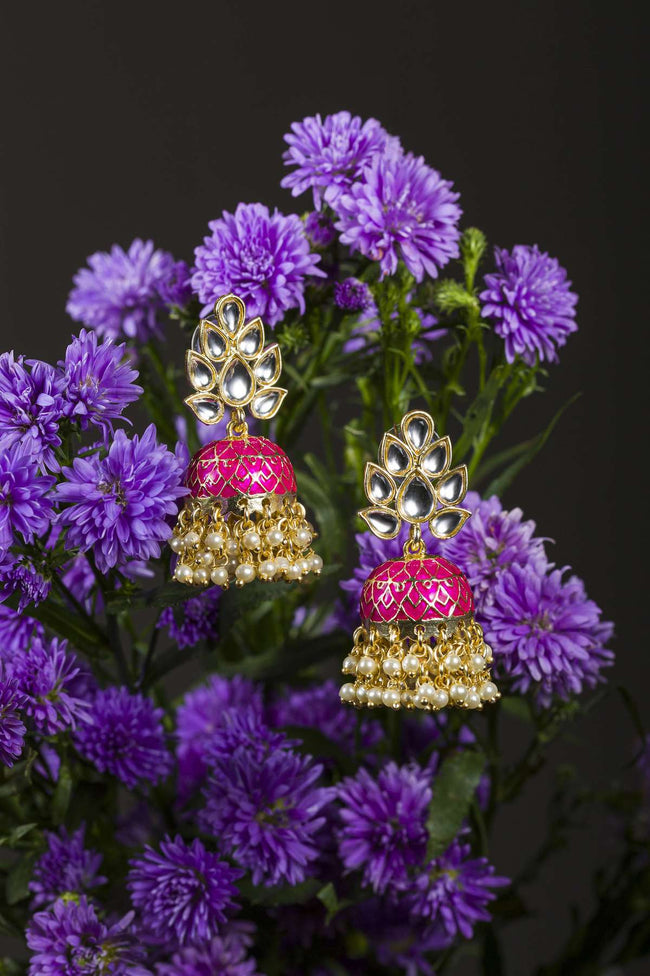
These are handcrafted jhumkas with hand-painted meenakari enamelwork, kundan stones and pearl detailing — the traditional combination, made by artisans rather than machines. No two pieces come out perfectly identical, which is the nature of hand-painted enamel and part of why it looks the way it does.
The honest bit about the material
These are made in gold-plated alloy — copper, brass and zinc — with meenakari and kundan work. That's not a shortcut, it's a requirement: hand-painted enamel and kundan setting cannot be done in stainless steel, which is too hard to work at this level of detail.
The trade is care. Alloy needs to stay dry and be stored properly, and it isn't built for daily wear the way our stainless steel range is. Treated as occasion jewellery, it holds its finish for years. Worn in sweat and humidity every day, it won't.
Key details
- Hand-painted rani pink meenakari enamelwork
- Kundan stones with pearl detailing
- Gold-plated alloy, handcrafted by Indian artisans
- Lightweight for their size — comfortable through a full function
- Occasion wear: keep dry, store in a pouch
- ₹299 · Ships in 1–2 days across India
What to wear them with
Best against: cream, ivory, white, beige, oatmeal. Rani pink was made for neutrals — it's the contrast that makes both the earring and the outfit look deliberate.
Also works with: deep green, navy, mustard and black. Jewel tones hold their own against rani rather than being overwhelmed by it.
Be careful with: pink and red sarees. Matching pink to pink usually reads as accidental rather than styled, and against red the two colours fight.
Keep the neckline simple. Statement jhumkas want a bare neck or a single thin chain — a heavy necklace and a heavy earring compete, and neither wins.
Perfect for gifting
Jhumkas are one of the easier ethnic gifts: no sizing, universally worn across ages, and a colour like rani suits every skin tone. Handcrafted meenakari also looks considerably more expensive than it costs, which is what you want from a gift under ₹500.
Care — please read
- Keep away from water, perfume, lotion and sweat entirely
- Put jewellery on last, after makeup and perfume have dried
- Wipe gently with a soft dry cloth after each wear
- Store in a dry airtight pouch, not loose in a box
Frequently asked questions
What colour saree do rani pink jhumkas go with?
Neutrals, primarily — cream, ivory, white and beige. Deep pink brightens pale fabrics and becomes the focal point of the look. It also works well against deep green, navy, mustard and black. Avoid wearing rani pink jhumkas with a pink or red saree; matching shades usually read as accidental, and pink against red competes rather than complements.
What is meenakari work?
Meenakari is the traditional Indian craft of applying coloured enamel to metal by hand, dating back centuries and closely associated with Rajasthan. Each piece is painted individually, which is why the colour has depth that printed or machine-set finishes don't, and why no two pieces are perfectly identical. It's usually combined with kundan — glass or stone set into gold-toned metal — as it is here.
Are these anti-tarnish like your other jewellery?
No, and it's worth being clear. Our anti-tarnish range is built on a stainless steel base and made for daily wear. These jhumkas are handcrafted gold-plated alloy, which is what allows the meenakari enamel and kundan work — that craftsmanship can't be produced in steel. They need to stay dry and be stored properly, and they're best treated as occasion jewellery. If you want earrings for genuine everyday wear, choose from the anti-tarnish range instead.
Are jhumkas heavy to wear for a full function?
These aren't. Weight is the main complaint about jhumkas generally, and it's usually a function of solid metal rather than size — these are built light for their scale, so they stay comfortable through a long event. If you have sensitive earlobes, a small plastic disc behind the earring back spreads the weight and helps considerably.
Will the enamel colour fade?
Not with proper care. Meenakari enamel is far more sensitive to chemicals than to knocks — perfume, hairspray, lotion and cleaning products are what dull it, not everyday handling. Put jewellery on last, keep it dry, and store it in a pouch rather than loose, and the colour holds for years.
What necklace goes with statement jhumkas?
Ideally none. Large jhumkas work best with a bare neckline or a single thin chain — a heavy necklace and heavy earrings compete for the same attention and the look ends up cluttered. If the saree has a deep neck and feels bare, a simple gold chain is enough.